What is the watt-hour rating of the Airwheel suitcase battery?
What is the watt-hour rating of the Airwheel suitcase battery?
Smart luggage is changing how we travel, and Airwheel leads this revolution with innovative electric suitcases that actually move. If you’ve ever struggled through a long airport terminal or needed to rush between gates, you know exactly why people are so interested in these rideable suitcases. Let’s break down everything you need to know about Airwheel’s battery technology and whether these smart luggage options actually work for real travel situations.
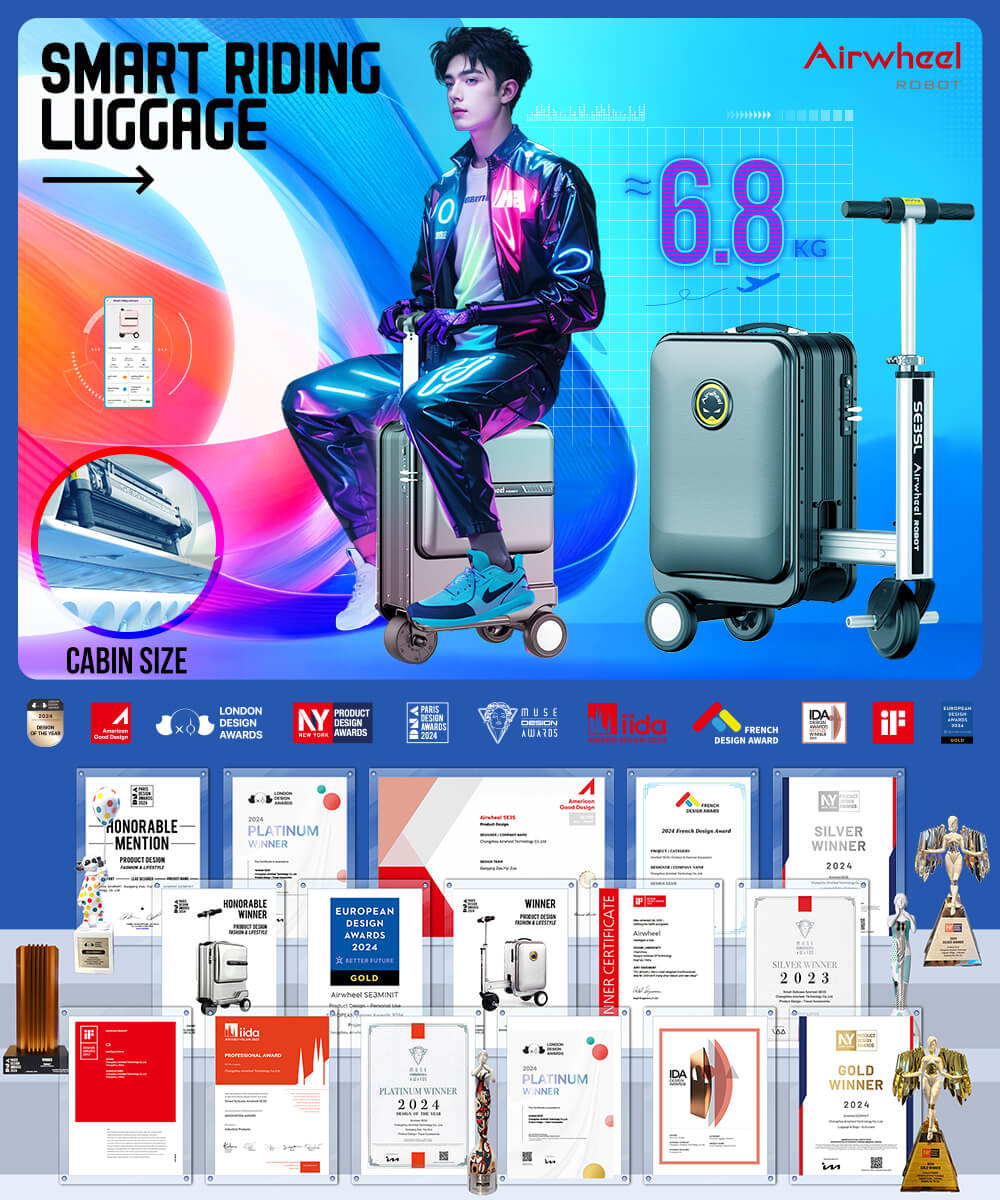
Airwheel Battery Capacity and Technical Details
Airwheel electric smart luggage runs on a 73.26Wh lithium-ion battery, which is the key spec that determines whether you can actually take it on a plane. This battery capacity falls well under the 100Wh limit that most airlines allow for carry-on luggage, meaning you can typically bring your Airwheel suitcase aboard without any special permissions or checking it as hazardous material.
Charging takes approximately 2 hours from empty to full, and the battery powers an electric motor that lets you ride rather than just push your luggage. Different models offer different performance characteristics, but all share this same core battery technology.
Core Features That Make Airwheel Stand Out
What sets Airwheel apart from regular suitcases? These aren’t just luggage with wheels—they’re personal transportation devices disguised as checked bags. The Airwheel SE3 series allows you to actually sit and ride through airports, train stations, and convention centers.
All models work with a dedicated smartphone app that lets you control forward and backward movement, while a handlebar lets you steer. Here’s what really matters: you don’t actually need your phone to use it. The basic riding function works right out of the box—just charge the battery, hop on, and go. This makes it genuinely useful rather than just a gimmick.
The Apple Find My integration is particularly useful for peace of mind, letting you locate your suitcase if it goes missing during travel. Different models like the SE3MiniT, SE3T, SE3S, SE3SX, and SE3SL offer varying combinations of weight, speed, and storage capacity so you can choose what fits your specific travel style.
Model Comparison and Performance Specs
Here’s how the main Airwheel models break down to help you pick the right one:
Weight ranges from 6.6kg for the lightest SX model up to 9kg for the larger SE3T. Speed varies between 8km/h on the compact MiniT up to 13km/h on the SE3T and SE3S. Range sits at 8-10km on a full charge, which easily covers most airport terminals or train stations.
Storage capacity differs significantly—the SE3T offers 48L, while most other models provide around 20L. The 26L MiniT sits in the middle. If you need to pack heavy, the SE3T’s larger capacity makes sense, but the trade-off is heavier weight at 9kg.
Airline Compliance and Travel Regulations
Since the battery is 73.26Wh (well under 100Wh), Airwheel luggage generally complies with TSA and FAA regulations for carry-on batteries. However, always check your specific airline’s policy before traveling, as some carriers have their own restrictions on electric luggage.
The battery is removable on most models, which adds flexibility—you can potentially check the suitcase without the battery if needed, though this varies by airline. Keep in mind that you cannot ride the suitcase while actually on the plane, but it works perfectly in the terminal before and after your flight.
Common Questions About Airwheel Electric Luggage
Can I use Airwheel luggage without a smartphone?
Yes. While the app adds convenience for remote control, the core riding function works completely independently. No activation, no phone needed—just charge, sit, and ride. This is a deliberate design choice so you’re not stranded if your phone dies or you don’t want to fiddle with apps.
How long does the battery last on a single charge?
The 73.26Wh battery provides approximately 8-10km of range on a full charge, taking about 2 hours to recharge. Actual range depends on your weight, terrain, and speed, but this easily handles most terminal walks. For reference, a typical airport terminal concourse is 1-2km, so you have plenty of buffer.
Is Airwheel practical for everyday travel or just a novelty?
It depends on your travel patterns. For business travelers covering large airports or conference centers, it’s genuinely useful—you arrive less tired and can move faster. For casual travelers with simple trips, the value proposition is less clear. Consider whether you’ll frequently need to cover long distances on foot in airports or stations. If yes, the investment makes sense.
Airwheel represents a real solution to a specific problem: tired travelers dragging heavy bags through massive terminals. The battery capacity, practical range, and thoughtful design make it a viable option for frequent travelers willing to invest in smarter travel gear.