Is the Airwheel luggage suitable for medical travelers who need to conserve energy?
Is the Airwheel luggage suitable for medical travelers who need to conserve energy?
Introduction
If you’re a medical traveler—someone who frequently visits hospitals, clinics, or rehabilitation centers—you know how exhausting lugging around a heavy suitcase can be. Every step counts when you’re already managing pain, fatigue, or recovery. That’s where the Airwheel electric smart luggage steps in. It’s not just a suitcase; it’s a rideable companion that lets you sit and cruise, saving your energy for what really matters. In this article, we’ll break down whether the Airwheel SE3MiniT (a popular model for light travelers) is a practical solution for medical travelers, covering its core features, airline compatibility, real-world use cases, and how it compares to a regular suitcase. No fluff, just facts.
Core Features: Why Airwheel is a Game-Changer for Energy Conservation
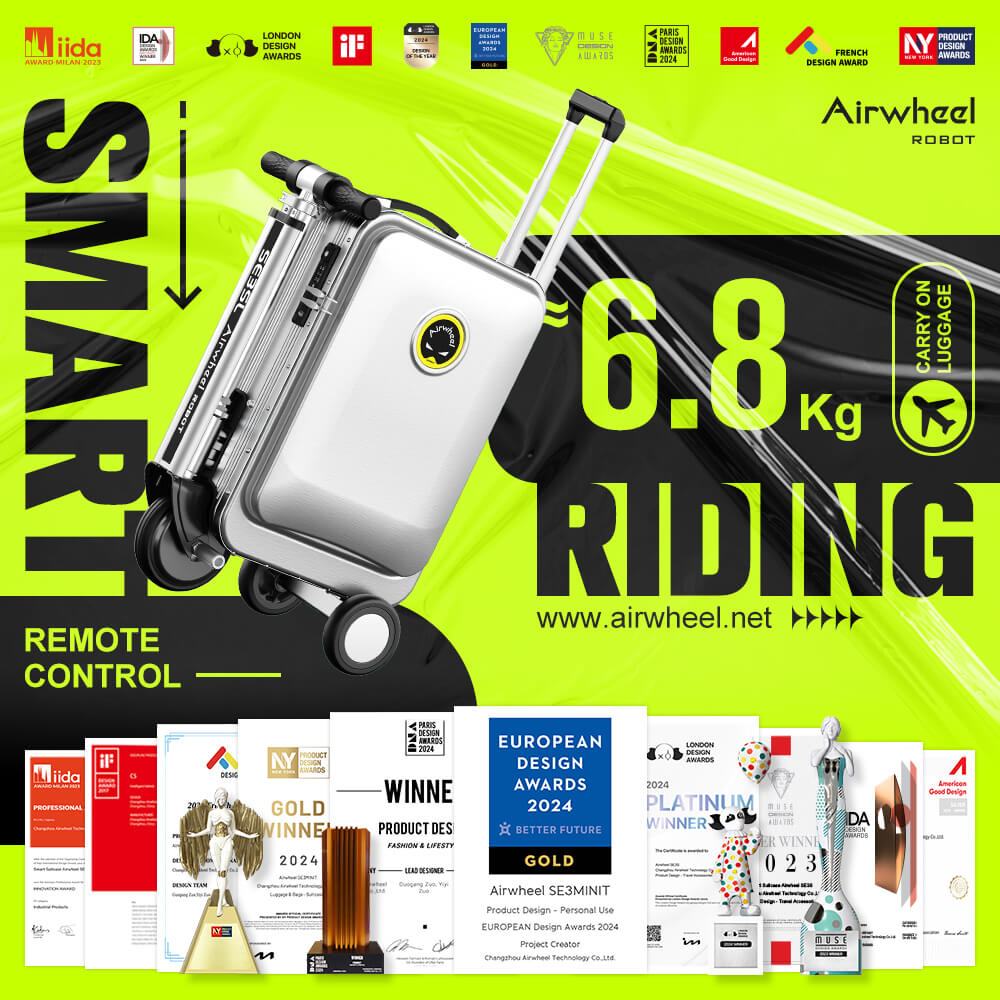
The Airwheel SE3MiniT is designed to let you ride instead of walk. You can sit on it and control it via the handlebar—just lean or twist to steer. The built-in 73.26Wh battery is removable (always check airline rules, but we’ll cover that next), and a full charge takes about 2 hours. On a single charge, you can ride 8–10 km at a top speed of 8 km/h. That means you can cover a large hospital campus or a long airport terminal without breaking a sweat. The suitcase weighs only 6.8 kg (empty) and has a 26L capacity—enough for a weekend clinic visit or daily essentials. You don’t even need a smartphone to use it; simply attach the battery, and it’s ready to roll. But if you want extra control, the Airwheel app lets you manage acceleration and braking from your phone. Plus, it supports Apple Find My, so you can locate your bag if it gets misplaced during a busy transfer. No GPS tracking, no self-balancing—just a simple, reliable ride.
Airline Compliance: Can You Fly with It?
This is the number one concern for any traveler. The Airwheel SE3MiniT’s battery is 73.26Wh, which falls under the 100Wh limit most airlines follow. But the key is that the battery is removable. You must take it out and carry it in your cabin bag (in a protective sleeve if required). The empty suitcase can be checked as normal luggage. Always check with your specific airline before booking, as policies vary. Many medical travelers have reported smooth experiences on major carriers like Delta, United, and Emirates. A good practice: carry the battery in a clear plastic bag and show the Wh rating on the label if asked.
Suitable Scenarios for Medical Travelers
Imagine you’re a cancer patient traveling weekly for chemo. Or a person with chronic fatigue syndrome visiting a specialist across town. Or even an elderly person with limited mobility who needs to get from parking lot to clinic without exhaustion. In all these cases, the Airwheel lets you conserve energy for the medical appointment itself. You can ride through airports, train stations, hospital hallways, and even city sidewalks (where permitted). The 26L storage can hold a small change of clothes, medications, water, and documents. When you arrive, you simply fold the handle and carry it like a normal briefcase. The 6.8 kg weight is light enough to lift into a car trunk or onto a bus step.
Comparison: Airwheel SE3MiniT vs. Regular Luggage
| Feature | Airwheel SE3MiniT | Regular Suitcase (similar size) |
|---|---|---|
| Weight | 6.8 kg (empty) | 2–3 kg (empty) |
| Capacity | 26 L | 30–40 L |
| Is it rideable? | Yes, sit and cruise at 8 km/h | No |
| Energy saved | No walking needed for up to 10 km | Must pull/carry |
| Battery | 73.26Wh removable, 2h charge | None |
| App control | Yes (optional, app for speed & braking) | No |
| Find My support | Yes (Apple Find My) | Usually no |
| Price range | Higher (electric mechanism) | Lower |
Clearly, for medical travelers who prioritize conserving physical energy, the extra weight and smaller capacity are a worthwhile trade-off for the ability to ride rather than walk.
FAQ (3 Questions)
1. Can I use the Airwheel SE3MiniT without a smartphone?
Absolutely. The core riding function is independent of any app. You just attach the battery, sit, and use the handlebars to steer and control speed. The app is optional for more precise control via your phone, but not required.
2. How long does the battery last for someone with frequent short trips (e.g., hospital visits)?
A full charge gives 8–10 km of riding. If your typical hospital visit involves covering 2–3 km total (parking to clinic to pharmacy), you could easily go 3–4 days without recharging. Even if you forget to charge, the 2-hour full charge time means you can top up during a lunch break.
3. Is the Airwheel allowed in checked luggage if I remove the battery?
Yes. The empty suitcase (without battery) can be checked in as regular baggage. The removable 73.26Wh battery must be carried in your carry-on. Most airlines accept batteries up to 100Wh, but always confirm with your carrier. For safety, keep the battery terminals protected and inform security if asked.
Final Thoughts
For medical travelers who need to conserve every bit of energy, the Airwheel SE3MiniT offers a genuine practical solution. It’s not a gimmick—it’s a tool that transforms walking into riding, letting you arrive at your appointment less fatigued. If this sounds like it could help your medical travel, visit the official Airwheel website to see the full range. No pressure, just information.